Here’s How The Physics And Chemistry Of Glassblowing Work

Glass as a material is full of contradictions
Glass as a material is full of contradictions. Depending on the form and use, glass can be fragile or strong, opaque or transparent, rough or smooth. The studios my colleagues and I teach and learn in, as glass instructors, echo this abundance of physical opposites. These environments are simultaneously immersive, complex, seductive and demanding.
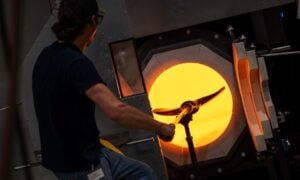
When the studio is in action, you might hear glass breaking, hot metal being quenched in water, glassblowing pipes rolling on the workbench rails, and some good tunes on the stereo. You might smell hot beeswax and burning newspaper. You might feel a bit of waste glass under your shoe or the intense heat from the furnaces and a breeze from a well-placed fan. Glassblowers learn to listen, to feel and to find some focus within and among the kinetic.
The constant stimuli of the glass studio may not seem anything like a sterile science lab, and yet glass artists need to accrue knowledge of physics and chemistry to achieve any kind of control with this dynamic material. They must choose a material with the desired properties and during the process judge factors such as heat and malleability.
Glass as a material
At Rochester Institute of Technology, where I help run the glass program, we primarily use two types of glasses. In our hot glass studio we melt “soft” glass. This glass is specifically formulated to be melted in a furnace and used by the glassblower. It’s a combination of fine mesh silica sand, soda ash and lime, with small amounts of a few additional ingredients that keep the glass beautiful when it’s at its top temperature of 2,200 degrees Fahrenheit (1,204 degrees Celsius).
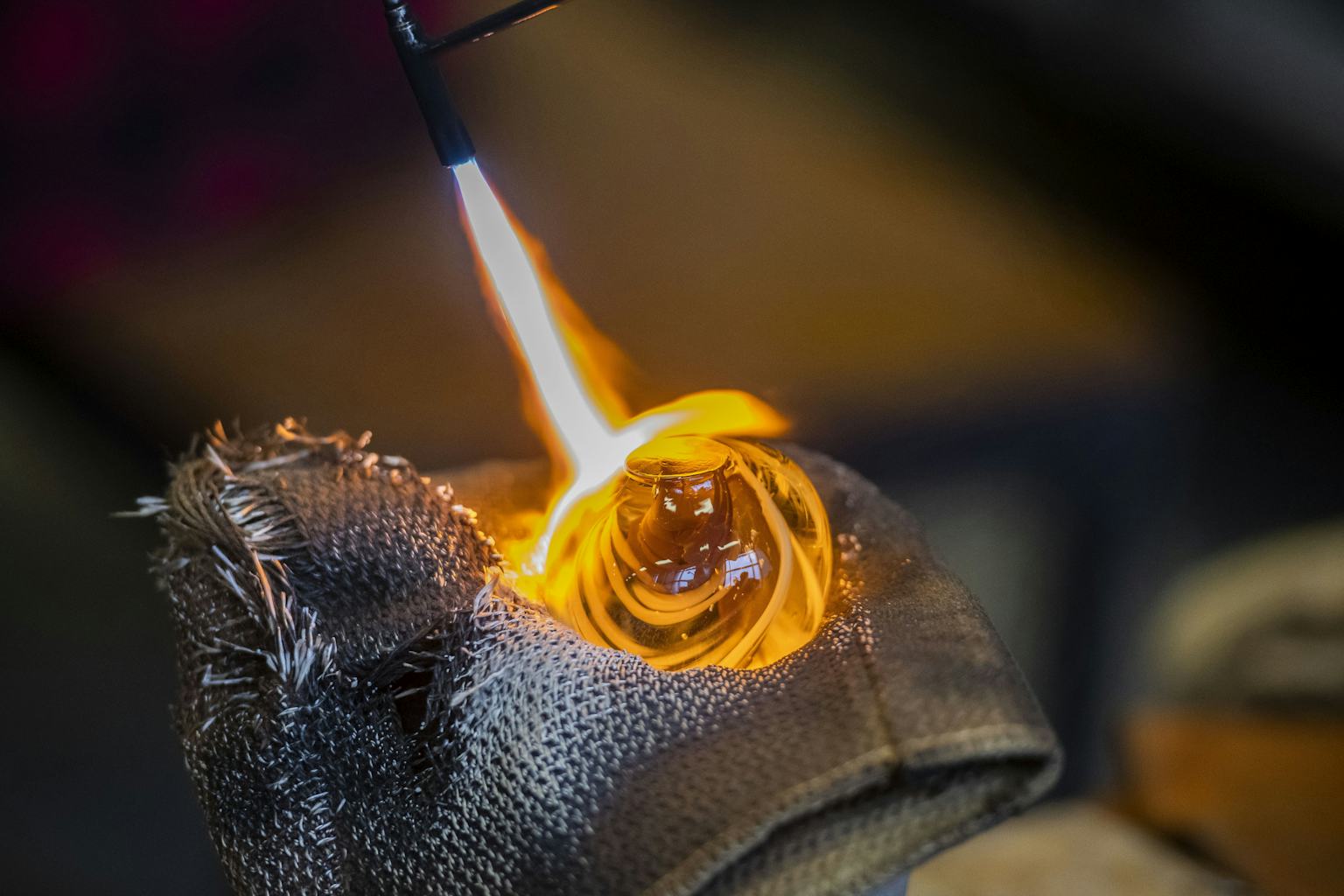
In our flameworking studio, we use a borosilicate glass. You might recognize this glass as the brand Pyrex made in Corning, New York. This is a super heat-resistant glass. It melts at a higher temperature than soft glass and arrives to our students in preformed rods that they can melt and shape by torch in our flameworking studio. The differences in chemistry really change how these glasses look and behave.
To Read The Rest Of This Article On The Conversation, Click Here