Can America’s Colorful Head Shops Survive The Corporatization Of Cannabis?

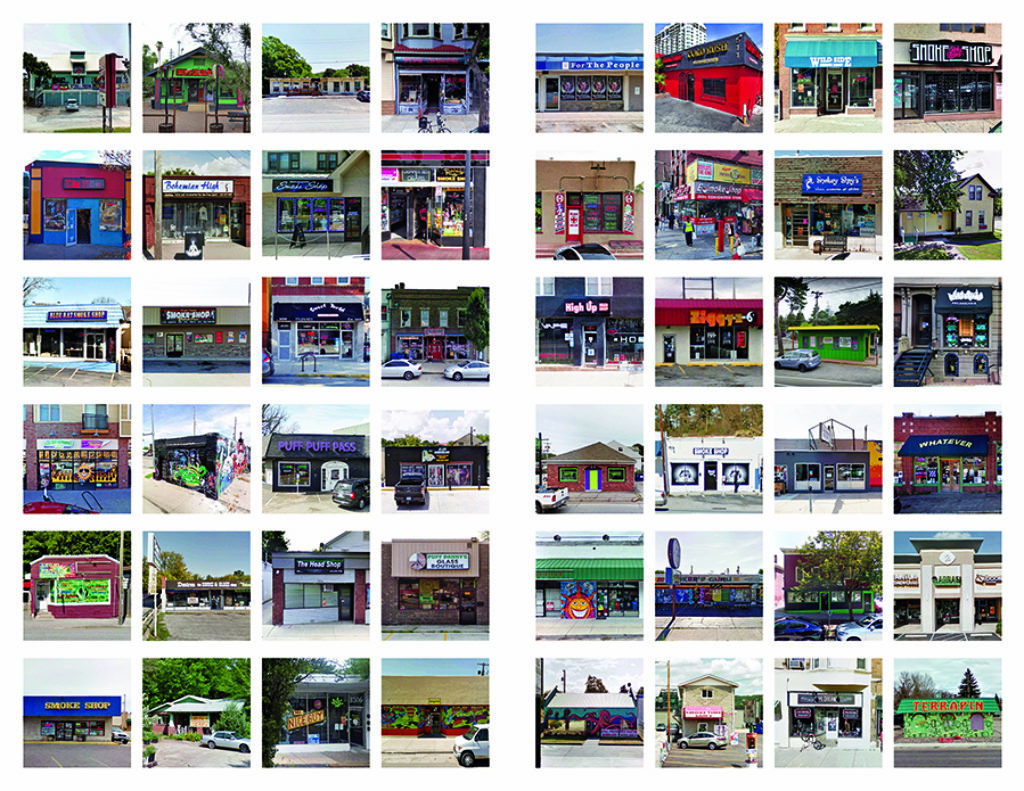
The Architect’s Newspaper takes a look at headshop design
For more than 50 years, the primary—indeed, only—architectural, public acknowledgment of cannabis in the United States has been the ubiquitous head shop. Emerging from 1960s counterculture and dedicated to selling paraphernalia relating to the consumption of both tobacco and cannabis, the latter has been the head shop’s true raison d’être. Hence, for most of its history the head shop has—perhaps uniquely among storefront retail—walked a very fine line between legality and illegality.
This survey of head shop storefronts across the United States, compiled by CLOG x Cannabis contributor Marshall Ford, illustrates this point well. While head shops remain largely small-scale, independent enterprises, a common set of design characteristics can be found that hearken back to the counterculture origins of the type and acknowledge the illicit product which historically could not be openly sold. However, as the legalization of cannabis continues its march from state to state, one wonders whether this aesthetic will survive the corporatization of cannabis which is sure to come.
The newest issue of CLOG examines this threat, in addition to the origins of both the medical and recreational use of cannabis, new delivery methods, legalization in the U.S. and abroad, police enforcement, and cannabis’s growing acceptance in the wellness industry. The issue also includes an interview with a high-end cannabis distributor, investigates the world of drug testing, and takes an up-close look at a new hemp farm.
To Read The Rest Of This Article On The Architect’s Newspaper, Click Here